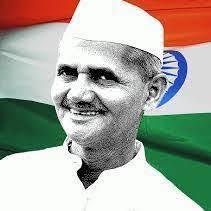
Lal Bahadur Shastri Death Anniversary 2024: The death anniversary of the second Prime Minister of India is observed on 11 January, he passed away on this day in 1966 in Tashkent, Uzbekistan. He had dedicated more than 30 years to the country and came to be known as a man of great integrity and competence. He was a man of great inner strength, humble and tolerant. He understood people's language and was a man of vision for the country's progress.
Brief Biography
Lal Bahadur Shastri studied at East Central Railway Inter College in Mughalsarai and Varanasi. He completed his graduation from the Kashi Vidyapeeth in 1926. He was given the title “Shastri” meaning “Scholar” by Vidya Peeth as a part of his bachelor’s degree award. But this title got into his name. Shastri was very much influenced by Mahatma Gandhi and Tilak.
He got married to Lalita Devi on 16 May 1928. He became a life member of the Servants of the People Society (Lok Sevak Mandal), founded by Lala Lajpat Rai. There he started to work for the upliftment of backward classes, and later he became the President of that Society.
During the 1920s, Shastri ji joined the Indian Independence Movement, in which he participated in the non-cooperation movement. He was sent to jail for some time by the Britishers.
READ| Why Lal Bahadur Shastri is known as the 'Man of Peace'?
In 1930, he also participated in the Salt Satyagraha, for which he was imprisoned for more than two years. In 1937, he joined as the Organising Secretary of the Parliamentary Board of U.P. He was again sent to jail in 1942 after Mahatma Gandhi issued the Quit India speech in Mumbai. He was imprisoned until 1946. Shastri had spent some nine years in jail in total. He utilized his stay in prison by reading books and familiarizing himself with the works of western philosophers, revolutionaries, and social reformers.
Political Achievements
Post India’s Independence, Lal Bahadur Shastri became the Parliamentary Secretary in U.P. He also became the Minister of Police and Transport in 1947. As a Transport Minister, he had appointed women conductors for the first time. Being the minister in charge of the Police Department, he passed the order that police should use jets of water and not lathis to disperse the agitated crowds.
In 1951, Shastri was appointed as the General Secretary of the All-India Congress Committee and got success in carrying out the publicity and other activities related to the election. In 1952, he was elected to Rajya Sabha from U.P. Being the Railway Minister, he installed the first machine at Integral Coach Factory in Chennai in 1955.
In 1957, Shastri again became the Minister for Transport and Communications, and then the Minister of Commerce and Industry. In 1961, he was appointed as Home Minister, and he appointed the Committee on Prevention of Corruption. He created the famous “Shastri Formula” which consisted of the language agitations in Assam and Punjab.
On 9 June, 1964, Lal Bahadur Shastri became the Prime Minister of India. He promoted the White Revolution, a national campaign to increase milk production. He also promoted the Green Revolution, to increase food production in India.
Though Shastri continued Nehru’s policy of non-alignment, but also made a relationship with the Soviet Union. In 1964, he signed an agreement with the Sri Lankan Prime Minister Sirimavo Bandaranaike, in concern with the status of Indian Tamils in Ceylon. This agreement is known as the Srimavo-Shastri Pact.
In 1965, Shastri officially visited Rangoon, Burma, and re-established a good relation with the Military government of General Ne Win. During his tenure, India faced another aggression from Pakistan in 1965. He granted liberty to the Security Forces to retaliate and said "Force will be met with Force" and gained popularity. Indo-Pak war ended on 23 September, 1965. On 10 January, 1966, the Russian Prime Minister, Kosygin, offered to mediate Lal Bahadur Shastri and his Pakistan counterpart Ayub Khan signed the Tashkent Declaration.